Friday, February 14, 2014

We Support Direct Access to Audiologists!

Direct Access: 

Our home state WA Representative, Jim McDermott, has introduced the Access to Hearing Healthcare Act of 2014 (H.R. 4035, direct access legislation). This bill eliminates the need for Medicare patients to obtain a physician referral prior to visiting an audiologist for an evaluation. Studies have shown a significant cost savings for the Medicare program if it adopts this legislation and it will allow more people access to hearing health services.

Audiologists are master's and doctoral level professionals holding state licensure in all states and the District of Columbia. In fact, audiologists are the only professionals who are university trained and licensed to specifically identify, evaluate, diagnose, and treat hearing disorders. The Medicare requirement for a physician referral pre-empts state licensure laws which currently allow patient's direct access to audiologists. Veterans, through the Department of Veterans Affairs (VA), for example, have been allowed direct access to audiologists for over 15 years, with successful and cost-saving results. Members of Congress and federal employees may also access audiologists directly through the Federal Employee Health Benefits Plan (FEHBP). 
Beneficiaries in the Medicare program should have the same freedom to access audiologists for covered hearing and balance testing.
Federal employees and members of Congress have direct access to audiologists. This bill would afford Medicare patients the same direct access to an audiologist. Please support this legislation by clicking here and sending a message to your congressman:

Click here to support Direct Access:

Monday, February 10, 2014

Ohio bill would provide hearing aid coverage for children and adults

Ohio legislators recently introduced a bill that would make Ohio the 4th state to require health insurers to include hearing aids as basic health coverage for people of all ages (not just children, but also adults).
The bill, SB 257, would provide coverage of up to $1500 per ear over a three-year period. This amount would apply to the hearing aids, assessment, fitting and adjustment. 

Monday, January 20, 2014

Hearing Aid Bill Re-Introduced in Olympia for 2014!

We're happy to tell you that House Bill 1356 was re-introduced last week for the 2014 session! Like 2013, it's currently listed as having 12 co-sponsors.

A summary of the bill can be found here:
http://apps.leg.wa.gov/billinfo/summary.aspx?bill=1356&year=2013


The bill would require health insurance plans in the state of Washington to cover a portion of hearing aids purchased for children and adults.

We urge everyone that believes people with hearing loss deserve greater access to treatment to please contact their legislator and encourage them to support and co-sponsor this legislation.


You can easily comment on the bill and notify your local legislators in a quick minute by clicking the link here:
https://app.leg.wa.gov/pbc/bill/1356

Personal letters can have an impact, see a sample letter here.

Calling is even more effective and the sooner you contact your legislator, the greater chance there is of the bill getting a hearing this year and possibly going up for a vote.

Tuesday, January 14, 2014

What does it cost to ensure access to good hearing?

One of the biggest arguments against any type of insurance "mandate" is that it increases the cost of premiums to those with insurance that "don't need" a particular service, etc. The truth is that when it comes to hearing aids, there have been several states who have published studies about the financial impact to insured residents if they mandate hearing aid coverage for children

Quite literally, just a few cents investment today could not only help improve the lives of hearing impaired kids, but could potentially save local schools and tax payers hundreds of thousands of dollars.

Here's just a few examples:

North Carolina: $0.03 per month increase in insurance premium on insured residents.

California: $0.03 per month average increase in health insurance premium increase

Wisconsin: $0.17 cents per privately insured person, per month for hearing aids and cochlear implants.

South Carolina: proposed legislation is estimated at $0.35 annually or approximately $0.03 per month increase in premiums.


Pay this today...                                                                 ...or pay this later:

These minuscule figures are less than the typical average premium increase per year. 

Would you be willing to invest less than $1 per year of your insurance premium to ensure all children in our state have the opportunity to hear?

Monday, January 13, 2014

Tell Legislature to Reintroduce Hearing Aid Bill in 2014!


Dear Supporters,

Please contact your legislators and the members of the Health & Wellness Committee to reintroduce and vote on HB 1356. With the new session under way, it's important that legislators hear from their constituents:

Go to the link and click on "comment on this bill" tab to tell your legislators how you feel.
http://apps.leg.wa.gov/billinfo/summary.aspx?bill=1356&year=2014#documents


Please urge your legislators and members of the Health & Wellness Committee to reintroduce and allow a hearing on this critical legislation. Thank you!


Friday, January 10, 2014

Improve the Lives of WA Hearing Impaired Children

We Need Your Help!

Last year, WA introduced a bill to authorize hearing aid coverage. Unfortunately, due to healthcare issues (i.e., the Affordable Care Act), our legislators were too afraid to take this bill out of committee despite growing support and pleas by parents and families.

Know the Facts:

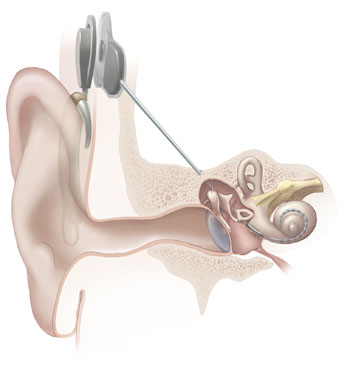
Each year in the state of Washington, approximately 200-250 babies are born with permanent hearing loss. Approximately 90-95% of these children could benefit form the use of hearing aids.

Image: Siemens Hearing Instruments
Unfortunately for many Washington families, the vast majority of private insurance plans  specifically exclude  hearing aids from being covered. 

In a tough economy, WA families are left searching to find a way to pay for these devices for their children (which on average cost $2000/ear or more) and many are forced to decide whether they have to use state Medicaid benefits in order to afford them due to the high cost and need for replacement every 3 to 5 years.

Studies have shown that children with hearing loss who do not receive early intervention cost WA schools (taxpayers) an additional $420,000 on average in special education costs alone. Yet, requiring private insurance plans to provide some degree of hearing aid coverage often costs less than a dollar per year. 

We need your help to ensure Washington becomes the next state to require health benefit plans to provide some form of hearing aid coverage for children. Here's a few ways you can help:

1) Sign our online petition.

2) Write your state legislator(s). A simple letter or brief email can make a huge impact upon our decision-makers in Olympia. A sample letter can be found here.

3) Like our Facebook page. Follow us on Twitter @WCHAA1.


Your support of Washington's hearing impaired children is truly appreciated!

Thursday, December 19, 2013

Give the Gift of Hearing!

Tis the season to spread Christmas cheer! When you're thinking about donating to your charities of choice this year, consider donating to one of the many wonderful hearing health organizations making a difference in the lives of people around the world:

http://hearinghealthmatters.org/hearingviews/2013/tis-season-gift-hearing/
ataSHF_logo_2013gfchl


Monday, December 16, 2013

2013 Noisy Toy List

It's that time of year again! This year's Noisy Toy list finds 7 out of 18 toys tested produce sound over 100 decibels (dB), which is enough to cause permanent hearing loss in less than 15 minutes.

Make sure your child's toy isn't on this years list!


http://union-bulletin.com/news/2013/dec/14/annual-noisy-toy-list-falls-deaf-earsdespite-indus/


Monday, November 11, 2013

Your health impacts your hearing

Many health conditions that are common in the United States such as diabetes, high blood pressure, cardiovascular disease, auto-immune disorders and stroke can impact your hearing. If you have been diagnosed with or have a history of one of the conditions listed, it would be recommended that you have your hearing evaluated annually.

Our ears are just as susceptible to these conditions as other parts of our body. In general, anything that is good for your body such as diet and exercise is good for your hearing as well. As a society, we place a lot of emphasis on getting our eyes, teeth and overall health checked, but we can't forget about our ears. The next time you are at your physician's office ask to be referred for a baseline hearing evaluation. Regular monitoring of hearing ability should be included in every physical examination.

Monday, October 7, 2013

Washington Hearing Organizations Warn Consumers


Press Release from 9/27/13:

The Washington State Academy of Audiology (WSAA), Washington Speech-Language Hearing Association (WSLHA), Washington Hearing Society (WHS) and the Northwest Academy of Otolaryngology (NWAO) have joined forces to help inform Washington consumers on the importance of seeking professional hearing care.

Growing concern over the unlicensed sale of hearing aids over the counter or through the mail, often without warning consumers, has prompted Washington's hearing health organizations to issue the public statement.
Unlike personal amplifiers, which are not intended to treat hearing loss, hearing aids are medical devices and are therefore subject to state and federal regulations in order to protect consumers. Washington, like most states, requires that hearing aids be evaluated and fit by a licensed professional. Professionals licensed to dispense hearing aids include: Audiologists, Hearing Instrument Specialists and Otolaryngologists (ENT physicians).

All four Washington hearing-health organizations hold serious health and safety concerns about the sale of hearing aids without examination and guidance by licensed professionals. They strongly encourage the estimated 700,000 people with hearing loss in the state of Washington and their families, to seek the advice of a state licensed professional, to ensure they are receiving the most appropriate care.


Saturday, September 14, 2013

Seattle Seahawks fans attempt to break loudest stadium record, what can fans do to protect their hearing?

Seattle Seahawk fans will attempt to break a world record for the loudest stadium in the world this Sunday. The record sound level is 131 decibels, which is like standing next to a jet engine. So how can fans protect their ears, watch this video from King 5 news to learn more.

http://www.king5.com/sports/seahawks/Hawks-fans-to-attempt-Guinness-World-Record-for-crowd-noise-Sunday-223344161.html

Tuesday, September 10, 2013

Starkey Hearing Foundation Benefits from Vikings TDs

In an effort to help educate young people on this issue, Starkey Hearing Foundation created the“Listen Carefully program to encourage youth to protect their hearing. In the last year, the Foundation distributed more than 16,000 Listen Carefully teaching guides to schools. These guides focus on the science of hearing and encourage students to put the lessons into practice.
Vikings fans will be encouraged to “Listen Carefully” through radio spots and game day program messaging at Vikings home games throughout the 2013 season. Fans will also be provided Starkey branded ear protection prior to all home games at Mall of America Field.
In addition, for each touchdown scored by reigning NFL MVP Adrian Peterson and All-Pro wide receiver Greg Jennings, the Vikings will donate $500 to Starkey Hearing Foundation to give the gift of hearing to people in need around the world and right here at home. The team will present the Starkey Hearing Foundation with a check during one of the final home games of the 2013 season.
In 2011, Peterson joined the Foundation on a mission trip to Uganda while Jennings helped give the gift of hearing in New Orleans (2013) and Tanzania (2012). Watch a video below that  features both of these players talk about how their work with the Starkey Hearing Foundation.
http://www.youtube.com/watch?feature=player_embedded&v=eZq3KFdwIpE


from: http://www.starkeyhearingtechnologies.com/blog/2013/09/starkey-hearing-technologies-teams-up-with-minnesota-vikings/

Saturday, August 31, 2013

New Guidlines for Pressure Equalization Tubes in Children

Most of us can remember a friend or maybe even ourselves not being able to go swimming as a kid due to having ear tubes. This longstanding treatment for middle ear fluid has received some attention recently with new guidlines being published about appropriate use of ear tubes. Children who have middle ear fluid for less than three months will not be considered for tubes. If the middle ear fluid is present for longer than three months, then the child may be considered a candidate for tubes if the condition is impacting there development (speech or cognitiive). The most surprising new guidline is that children with ear tubes will generally not need to wear swim plugs when swimming or bathing. Here is the link if you would like a more detailed overview: http://www.audiology.org/news/Pages/20130822.aspx

Here is what an actual ear tube looks like inserted into the eardrum:

Wednesday, August 28, 2013

Spotify to donate to Starkey Hearing Foundation


Refer a Friend to Spotify & Give the Gift of Hearing


For every referral, (thru 9/2), Spotify will donate $1 to Starkey Hearing Foundation

Check out the LSTN Headphone’s “Giving Back. Amplified.” program!

Invite your friends to join Spotify to help give the gift of hearing.


Monday, August 19, 2013

Newborn hearing screening is effective, but still presents with flaws

A recent study, indicated that newborn hearing screenings have proven to be highly effective at identifying children with hearing loss, but children with slight or mild hearing loss may pass the screening at birth. Children who have late onset hearing loss may also pass the newborn hearing screening initially. Newborn hearing screenings can provide a false sense of security, but it's important to note how effective this program has been since it was implemented. A key recommendation for parents is to have an audiological evaluation for any concerns regarding speech and language delays. Here is the link for a more in-depth overview of the study: http://www.audiology.org/news/Pages/20130812.aspx

Wednesday, August 14, 2013

How Do We Know What a Kid With Hearing Loss Needs In School?

Everyone who works with children with hearing loss knows that, even with all  the great technology that  is available  today, kids still need help.  Because the technology is so good, school staff members sometimes think that kids do not need any  help. I have had school staff tell me that now that a  child has a cochlear implant he is no  longer disabled. Well, he  is  certainly much better than he  was before he received an implant, but it  is really important to understand that he is still not normal hearing.
[...]
Hearing in the classroom
Even if a child is hearing well, a child with hearing loss is listening through a damaged auditory system. We know that a child with hearing loss needs four times the repetition to learn. So we know that in a classroom situation, a child with  hearing  loss  will need to hear everything multiple times to get  the message. What does this tell us about how a child  is  learning? It tells us that we need to be sure a child has the  information he needs to follow  classroom discussion. To me this means that a  child needs preview and review by a person who  has academic skills.  Usually this  is  a teacher of children with  hearing loss. It may be a speech-language pathologist who provides the service, and this can work  well for young children, but may not be optimal for older children where academic material is more difficult. The SLP will also be responsible  for teaching all  speech and language skills so, if the SLP is responsible  for preview and review, more time needs to be allotted to service provision.
Looking at test results
When reviewing evaluations it is important to look at all subtests. People frequently look at the total score and, if a child seems to be doing well, they make a determination that no services are needed. However, it is very valuable to look at all subtests and see areas in which a child is either below average or scores more poorly than in other areas. For example, if a child is within normal limits on  the overall test but is performing poorly on auditory memory tests, it indicates that she will need therapy to address auditory memory skills even if her overall score is good.

Comparing test results with other kids in the class
It is important to compare kids with other kids in the same school, not  just with kids in the standardized test pool. This is especially important for child in high achieving school districts. Kids need to compete with the kids around them. So we need  to pay attention to how kids are performing and  work  hard to keep them there. As long as we pay good attention we will succeed in helping kids be the best they can be.

Adapted from a post by Jane Madell at HHTM (August 7, 2012)

Monday, July 22, 2013

Hearing loss in children is often associated with balance disorders

Due to the anatomical link between the hearing and balance system, it may not be a surprise that hearing loss and balance dysfunction are often coexisting conditions. Children who have been diagnosed with hearing loss are at higher risk for balance disorders, this is often an overlooked area in the evaluation and treatment of hearing loss. Audiologists and physical therapists can provide pediatric balance evaluations to determine if a balance disorder is concurrently present with the diagnosis of hearing loss.


Source: Google images

More awareness is being brought to this area and in the future balance screenings may be more widely used as a tool to ensure proper development of our all important balance system. For more in-depth information click the link below to access an overview of pediatric balance disorders from the Vestibular Disorders Association: https://vestibular.org/pediatric-vestibular-disorders.

Tuesday, July 9, 2013

Head of Starkey Hearing Foundation will match donations up to $100,000

Today, Bill Austin announced that he will match donations up to $100,000.

The Starkey Hearing Foundation uses hearing as a vehicle to reflect caring and help people reach their full potential. More than 360 million people worldwide have a disabling hearing loss, yet many do not have access to the hearing care that can help them. They have helped develop sustainable systems of hearing care globally, fit and given more than 100,000 hearing aids to people in need each year, and have worked in over 100 countries. 
Starkey Hearing Foundation

Please pass along the message and consider donating today:

https://action.starkeyhearingfoundation.org/

Thursday, June 27, 2013

Worst Noises in the World

The worst noises in the world: Why we recoil at unpleasant sounds

In a study published in the Journal of Neuroscience and funded by the Wellcome Trust, Newcastle University scientists reveal the interaction between the region of the brain that processes sound, the auditory cortex, and the amygdala, which is active in the processing of negative emotions when we hear unpleasant sounds.
Brain imaging has shown that when we hear an unpleasant noise the amygdala modulates the response of the auditory cortex heightening activity and provoking our negative reaction.
"It appears there is something very primitive kicking in," says Dr Sukhbinder Kumar, the paper's author from Newcastle University. "It's a possible distress signal from the amygdala to the auditory cortex."
Researchers at the Wellcome Trust Centre for Neuroimaging at UCL and Newcastle University used functional magnetic resonance imaging (fMRI) to examine how the brains of 13 volunteers responded to a range of sounds. Listening to the noises inside the scanner they rated them from the most unpleasant - the sound of knife on a bottle – to pleasing - bubbling water. Researchers were then able to study the brain response to each type of sound.
....
Professor Tim Griffiths from Newcastle University, who led the study, says: "This work sheds new light on the interaction of the amygdala and the auditory cortex. This might be a new inroad into emotional disorders and disorders like tinnitus and migraine in which there seems to be heightened perception of the unpleasant aspects of sounds."

MOST UNPLEASANT SOUNDS
Rating 74 sounds, people found the most unpleasant noises to be:
1. Knife on a bottle
2. Fork on a glass
3. Chalk on a blackboard
4. Ruler on a bottle
5. Nails on a blackboard
6. Female scream
7. Anglegrinder
8. Brakes on a cycle squealing
9. Baby crying
10. Electric drill

LEAST UNPLEASANT SOUNDS
1. Applause
2. Baby laughing
3. Thunder

4. Water flowing